How to make high gloss traceless injection molded parts
High gloss injection molding technology is also known as thermal cycle injection molding technology. Using this technology, any shape of the mold surface can be well copied, so that there is no melting mark on the surface of the product, and the surface high gloss can achieve the mirror effect; Improve the strength and surface hardness of plastic parts; Make thin-wall molding, improve injection fluidity, and improve product and strength; The injection cycle of thick wall molding can be reduced by more than 60%; No subsequent spraying process is required, which can reduce the process flow and save energy and materials.
This can not only directly reduce the cost of plastic products, but also better protect the environment and the personal health of operators.
Process principle of high gloss injection molding:
Heat the mold before and during clamping. After the mold closing is completed, the injection is carried out when the temperature reaches the set conditions. During the injection process, the mold continues to maintain high temperature, which can maintain good fluidity in the mold during rubber injection. After the injection is completed, the mold is cooled during pressure maintaining cooling, which can greatly shorten the cooling time of the product, so as to improve the production efficiency.
The traditional method is to use mold temperature machine to warm the mold, but the shortcomings of this method are as follows:
1. Unable to meet the needs of heating and cooling in high gloss injection molding;
2. The temperature rise range is small, and the weld mark on the product surface can only be reduced but can not be eliminated;
3. The higher the hardness of the plastic, the worse the fluidity. Therefore, the surface hardness of products with this process can only reach Hb level, which can not meet the actual use needs;
When the mold is heated up, it will expand and shrink when it is cooled down, making the clamping force very unstable. It is easy to cause various defects such as dissatisfaction, charring, large internal stress and so on.
The steam high gloss injection molding technology developed on the basis of this process has made improvements to the above defects:
1. In this technology, the water pipe is opened in the mold. When it is necessary to raise the temperature, steam is supplied, and when it is necessary to lower the temperature, cold water is supplied. After cooling, the residual water can be blown out with compressed air to ensure that the temperature can be raised and lowered;
2. To eliminate various product faults such as weld mark clip, water mark and lack of glue to a certain extent;
3. The surface hardness of the product is greatly improved due to the large temperature rise and the use of plastics with H or even 2H hardness;
4. When the pipe is set inside the mold, only the inner surface of the mold is heated or cooled, and the overall expansion of the mold is small, so various product defects caused by the instability of the mold locking force are reduced.
The high gloss products to be produced need the cooperation of injection molding machines, molds, temperature control equipment, high gloss products, plastics, boilers and cooling devices:
1. Configuration of plasticizer
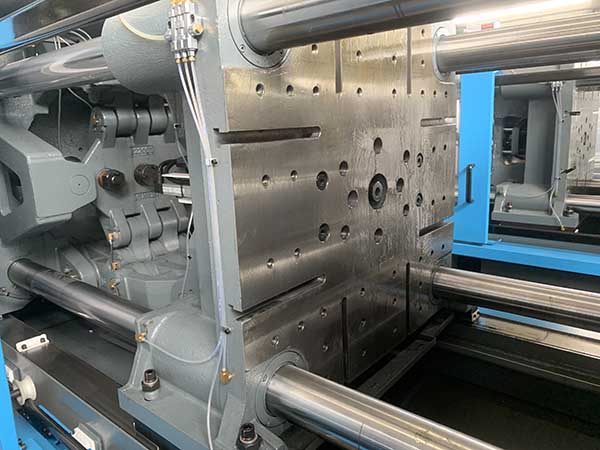
① The rigidity of the clamping mechanism is better; Due to the continuous heating and cooling in the whole production process. Therefore, the clamping mechanism of the injection molding machine must be rigid and have good strength to ensure the accuracy and stability of the clamping force. So as to ensure the surface quality of products.
② Choose large mold locking injection molding machine: when using this process, because gas assisted injection can no longer be used, the mold locking force required to produce products will be relatively large.
③ Select a small injection quantity according to the situation: for example, when producing flat-panel TV, LCD frame and other products, it is not necessary to have a large injection quantity. When selecting an injection molding machine, try to choose an injection molding machine with a small injection quantity. The actual weight of the product is between 30% ~ 80% of the theoretical injection amount of the injection molding machine. If the glue injection amount of the machine is too large, the glue will stay in the barrel for a long time, and it is easy to decompose separately, resulting in defects such as silver wire on the product surface.
④ The plastic used to produce high gloss products with screw has high hardness and relatively low melt index, so it is required that the screw plasticization is better. At the same time, the shear of the screw should not be too large, otherwise the rubber will be easy to decompose.
2. Mold configuration
① The inner surface of the mold requires a very high finish to ensure the surface quality of the products;
② The pipeline inside the mold must be reasonable to ensure temperature rise and drop;
③ The pipe inside the mold should have good thermal conductivity;
④ As the production process needs constant heating and cooling, the steel used for the die is better;
⑤ Pay special attention to the maintenance of the mold during use to ensure that it is dry and dust-free.
3. Configuration of temperature control equipment
① Temperature control should be very accurate, which is an important guarantee of quality
② The reaction of temperature control equipment should be very fast to ensure high production efficiency
4. Plastics
When producing products with high surface quality, commonly used plastics include ABS, PC + ABS or PMMA + ABS. Among them, the hardness of ABS is low, and the hardness of PMMA + ABS is high, up to h or even 2H. However, the higher the hardness, the lower the melt index. The fluidity will become poor, so appropriate plastics can be selected according to production needs.
Steam traceless high gloss injection molding technology greatly improves the surface quality and surface strength of products, and can cancel the subsequent spraying or painting processes, which not only protects the environment and the personal health of operators, but also saves expensive secondary processing costs due to the reduction of process flow, greatly reduces the production cost and saves energy and materials.