Intelligent Simulation Technology for Injection Molds: Key to Enhancing Production Efficiency and Quality
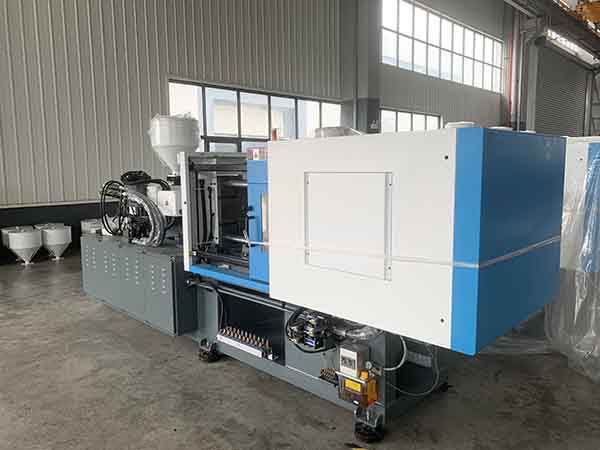
Injection mold design and production are crucial processes in plastic manufacturing. To improve the quality and production efficiency of injection-molded products, as well as reduce costs and minimize resource waste, optimization is required in mold design and production for injection molding machines. Intelligent simulation technology, as an advanced tool, provides accurate and efficient solutions for mold design and production processes. Let’s explore the application of intelligent simulation technology in injection mold design and production, along with its benefits and future development directions.

1、Principles of Intelligent Simulation Technology for Injection Molds
Intelligent simulation technology for injection molds is an advanced computer-based technique that enables optimization of mold design and precise control of the production process by monitoring and analyzing various parameters during the injection molding process. The basic principles include:
1.1. Establishing a mathematical model of the injection process: By modeling physical phenomena such as fluid dynamics, heat transfer, and solidification shrinkage in the injection process, a comprehensive mathematical model of the injection process is constructed.
1.2. Designing optimization algorithms for molds: Based on the mathematical model of the injection process, algorithms are designed to optimize mold design, aiming to improve mold lifespan and production efficiency.
1.3. Implementing intelligent simulation of molds: By combining the mathematical model of the injection process and mold optimization algorithms using computer software, intelligent simulation of molds is achieved, providing reliable data support for actual production.
2、Application of Intelligent Simulation Technology in Injection Mold Design
2.1. Mold flow analysis: Simulating the molten plastic flow and cooling process during injection molding to optimize mold structure and cooling systems, thereby enhancing product quality and production efficiency.
2.2. Stress and deformation analysis: Evaluating the stress and deformation experienced by molds during the injection process to avoid mold rupture and deformation, thus extending mold lifespan.
2.3. Plastic shrinkage analysis: Predicting dimensional changes in injection-molded products, optimizing mold design, and ensuring product dimensions meet requirements.
2.4. Mold wear analysis: Simulating mold wear during the injection process to optimize material selection and lubrication measures, reducing mold wear and maintenance frequency.
2.5. Manufacturing process simulation: Simulating the manufacturing process of injection molds to determine the optimal processing path and parameters, thereby improving production efficiency and quality.
2.6. Mold assembly simulation: Simulating the mold assembly process to detect interference and errors, enabling early problem identification and resolution, and reducing assembly time and costs.
2.7. Mold lifespan prediction: By simulating the working conditions and usage of molds during the injection process, predicting mold lifespan and formulating maintenance plans to reduce failure rates and downtime.
3、Advantages of Intelligent Simulation Technology for Injection Molds
Intelligent simulation technology for injection molds offers several significant advantages:
3.1. Enhanced production efficiency: By utilizing intelligent simulation technology, precise control of the mold production process can be achieved, leading to improved production efficiency.
3.2. Reduced production costs: Intelligent simulation technology enables optimized mold design, thereby reducing manufacturing costs.
3.3. Improved product quality: Real-time monitoring and analysis of the mold production process through intelligent simulation technology ensures product quality.
3.4. Extended mold lifespan: Intelligent simulation technology facilitates optimized mold design and maintenance, leading to an extended mold lifespan.
3.5. Reduced trial-and-error cycles: By utilizing intelligent simulation technology, production process issues can be identified and resolved during the mold design stage, reducing trial-and-error cycles and improving trial efficiency.
4、Future Development Directions of Intelligent Simulation Technology
4.1. Application of machine learning and artificial intelligence: Utilizing machine learning and artificial intelligence algorithms to enhance the accuracy and predictive capabilities of simulation models.
4.2. Integration of virtual reality and augmented reality: Applying virtual reality and augmented reality technologies to mold design and production processes to achieve a more intuitive and interactive simulation experience.
4.3. Integration with the Internet of Things (IoT): By combining intelligent simulation technology for injection molds with IoT, remote monitoring and optimization of the injection molding process can be achieved.
5、Conclusion
Intelligent simulation technology for injection molds provides significant benefits to the plastic manufacturing industry. Through mold flow analysis, stress and deformation analysis, plastic shrinkage analysis, and mold wear analysis, mold design and production processes can be optimized, resulting in improved product quality and production efficiency. By utilizing manufacturing process simulation, mold assembly simulation, and mold lifespan prediction, the mold production process can be optimized, reducing costs and resource waste. The widespread application of intelligent simulation technology will promote the sustainable development of the injection molding industry, enhancing product quality and production efficiency while reducing costs and resource waste.


